Geisha
Geisha, or Maiko as they are also called in Kyoto, are professional Japanese performers whose role is to entertain guests during meals, gatherings and other special occasions. They are trained in several traditional Japanese arts, such as dance and music. They are there to make guests feel more comfortable with dance and song performances and conversation.
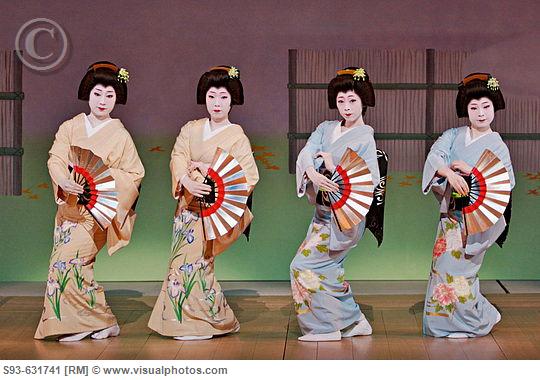
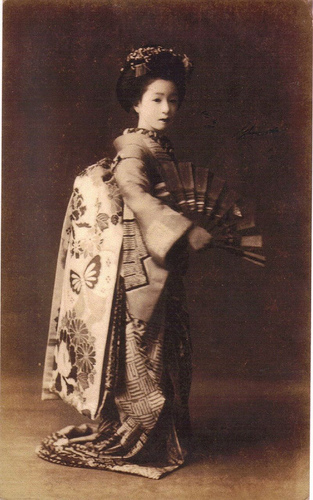
Geisha were idolized by young girls however, by the early 20th century Geisha were seen as old fashioned and today Geisha districts are extremely rare and very expensive to keep up. But if you know your way around Kyoto they aren’t hard to find. Gion is Kyoto’s most famous geisha district, located between the Kamo River in the west and the Yasaka Shrine in the east. Here you will find many shops, restaurants and teahouses. Tourists flock to Gion in hopes of catching a glimpse of a Geisha on their way to or from an engagement, however being entertained by Geisha while dining is quite the ultimate experience for tourists.
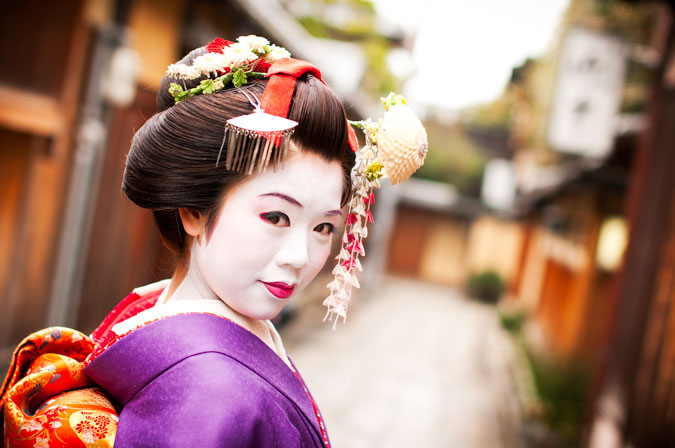
Geisha services are very expensive and traditionally require a referral from a current customer, however there are many travel agencies who offer Geisha experiences to tourists willing to pay the money. Luckily for the tourist on a budget there is a cultural show held everyday at Gion Corner aimed at foreign tourists. The show is highly concentrated and has many short performances of tea ceremony, ikebana, and plays and dances performed by trained Geisha.
Each Geisha goes through an extensive training which usually takes a total of about 6 years, during their training they are called Maiko, which is an apprentice Geisha. They learn the art of dancing, singing, tea ceremony, language and hostessing as they live in a okiya, which is something like a boarding house, with other Maiko like themselves. Each okiya has a house mother who manages their career, and as they work they pay a certain percentage to help maintain the household and take care of other Maiko and Geisha who also live in the house.
Real Geisha are hard to find, but if you know where to look and if you have the funds it is definitely something that every person visiting Japan must see. But beware; there are many pseudo Geisha who wear a wig and kimono to perform for Western tourists or prostitutes who misuse the name Geisha to drum up more business. But if you are someone who is looking for an authentic, traditional experience in Japan, the Geisha district is definitely the place you want to be.
Bibliography
"Geisha History." SJSU DIGITAL ART LOBBY. N.p., n.d. Web. 17 May 2012. <http://gallery.sjsu.edu/oldworld/asiangate/floating_world/geishah2.html>.
"Geisha (Geiko)." Japan-Guide. N.p., n.d. Web. 18 May 2012. <www.japan-guide.com/e/e2102.html>.
"Gion." Japan-Guide. N.p., n.d. Web. 18 May 2012. <www.japan-guide.com/e/e3902.html>.
"The History and Culture of Japanese Geisha." History Undressed. N.p., n.d. Web. 17 May 2012. <http://www.historyundressed.com/2008/08/history-and-culture-of-japanese-geisha.html>.
http://factsanddetails.com/japan.php?itemid=710&catid=20&subcatid=131
